

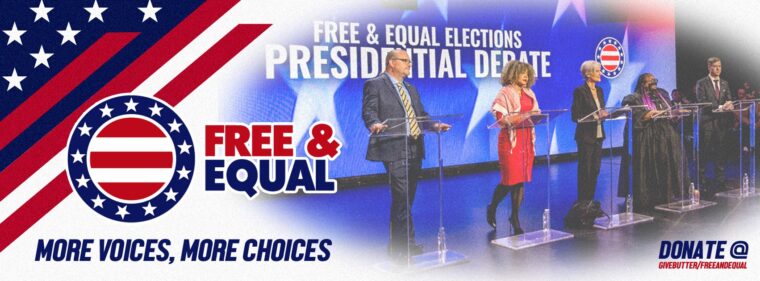
Invest in Free & Equal Elections
Donate today!
Featured News

Watch the Free & Equal Presidential Debate, co-moderated by Christina Tobin and...
Watch Past Debates

Kim Iversen Interview: You MUST Watch This Debate...
Five presidential candidates are confirmed to take the stage on February 29th at the...
Watch the replay

Infowars Interview: Without Free and Equal Elections, The Nation...
"Video: Without fair elections, nation's fate at stake. #Rumble #Democracy"
Watch the replay
Blockchain Election Assistant App (Beta)
Explore our beta-mode debate platform, where cutting-edge blockchain technology is employed to determine the candidates who earn their place on the stage. Fueled by Nexus.io, every vote is securely recorded as a tamper-proof transaction on the blockchain, guaranteeing the integrity and fairness of the selection process. Embracing a decentralized approach, our platform empowers the community to democratically select debaters based on merit and popularity, effectively minimizing the risks associated with manipulation or bias. Join us in shaping a transparent and equitable discourse environment.
Learn More
Help Support Free & Equal Debates
Your participation has shaped this debate. Now, let's take a stand against corporate influence in politics. By supporting our crowdfunding campaign, you're helping to keep the debate focused on the issues that matter to you, free from censorship or corporate agendas. This is about giving power back to the people, ensuring a platform for open, unfiltered dialogue. Donate now to fund a debate that truly represents your voice: